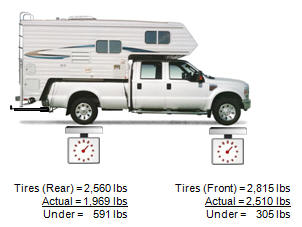
Predicts Vehicle and Axle Weights When Adding A Camper
US Measurements (lbs, inches, gallons)
Step 1: Enter Truck & Camper Information
Vehicle Ratings (From Vehicle Labels and/or OEM Information):
Recommendation: Use weigh scale whenever possible as OEM info usually differs from actual.
DISCLAIMER: The calculations in this document have NOT been engineered nor reviewed/approved by a professional
engineer. The calculations and information provided may contain errors and MUST NOT BE USED without
reference to manufacturers published specifications.
Although this calculator is in the public domain, no
guarantee is expressed or implied that it will serve the purpose the user intended.
By Clicking the "Calculate Results" button, you acknowledge that you have read and understand this disclaimer.
Using a hitch extension???
Click Here to see our Hitch Extension Calculator
Questions or Comments about this calculator??
Click Here to contact us

Truck Weight (No Camper)
- Weight of truck before camper loaded.
- Includes driver, but no passengers or other cargo.
- Fuel tank should be > 3/4.

Camper Dry Weight
- Camper Dry Weight. The value specified by the manufacturer as the total camper weight when it left the factory.
- Includes fridge, stove and other manufacturer installed options. Typically will include a single battery.
- Excludes water, propane, food, gear, etc.
- Caution: Many manufacturers under-state the dry weight. If the actual weight cannot be confirmed, it is recommended to add 5% to 10% to the stated amount.

Camper Center of Gravity
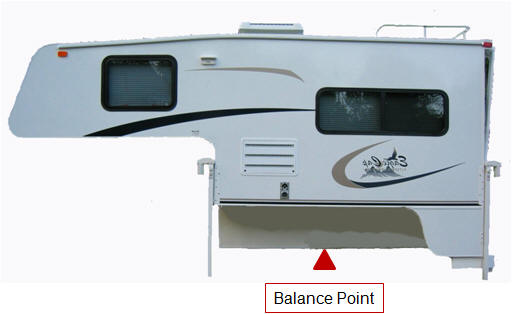
- Center of Gravity is the balance point of the camper when it left the factory. It typically includes consideration for the placement of water tanks.
- The manufacturer may provide this number, but if not, assume it is 4-inches to 6-inches ahead of the center point of the truck box it is designed to fit (i.e. @ 42-inches for a full size pickup box of 96-inches).
- The center of gravity can be significantly affected by how the camper is loaded, or by how optional equipment is installed (example - a generator installed in a rear compartment will shift the center of gravity rearward).
- Look for a sticker on the inside wall or cupboard of your camper. It may indicate the center of gravity.
GVWR
- Gross vehicle weight rating. The value specified by the manufacturer as the maximum allowable loaded weight of the vehicle.

GAWR
- Gross axle weight rating. The value specified by the manufacturer as the maximum loaded weight on any single axle on the vehicle.
- May be governed by State or Provincial Regulation.

Tire Ratings
- The value specified by the tire manufacturer as the maximum allowable load that can be put on each tire.
- May be governed by State or Provincial Regulation.
- Dual tires mounted on the rear axle will have a lower rating than the same tire mounted on the front axle.
- The maximum permissible load varies with the cold inflation pressure. Consult the manufacturers data for specific values.
- Do not operate above the maximum pressure stamped on the tire sidewall.